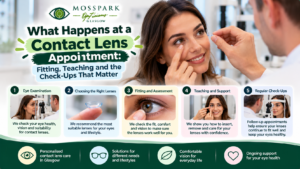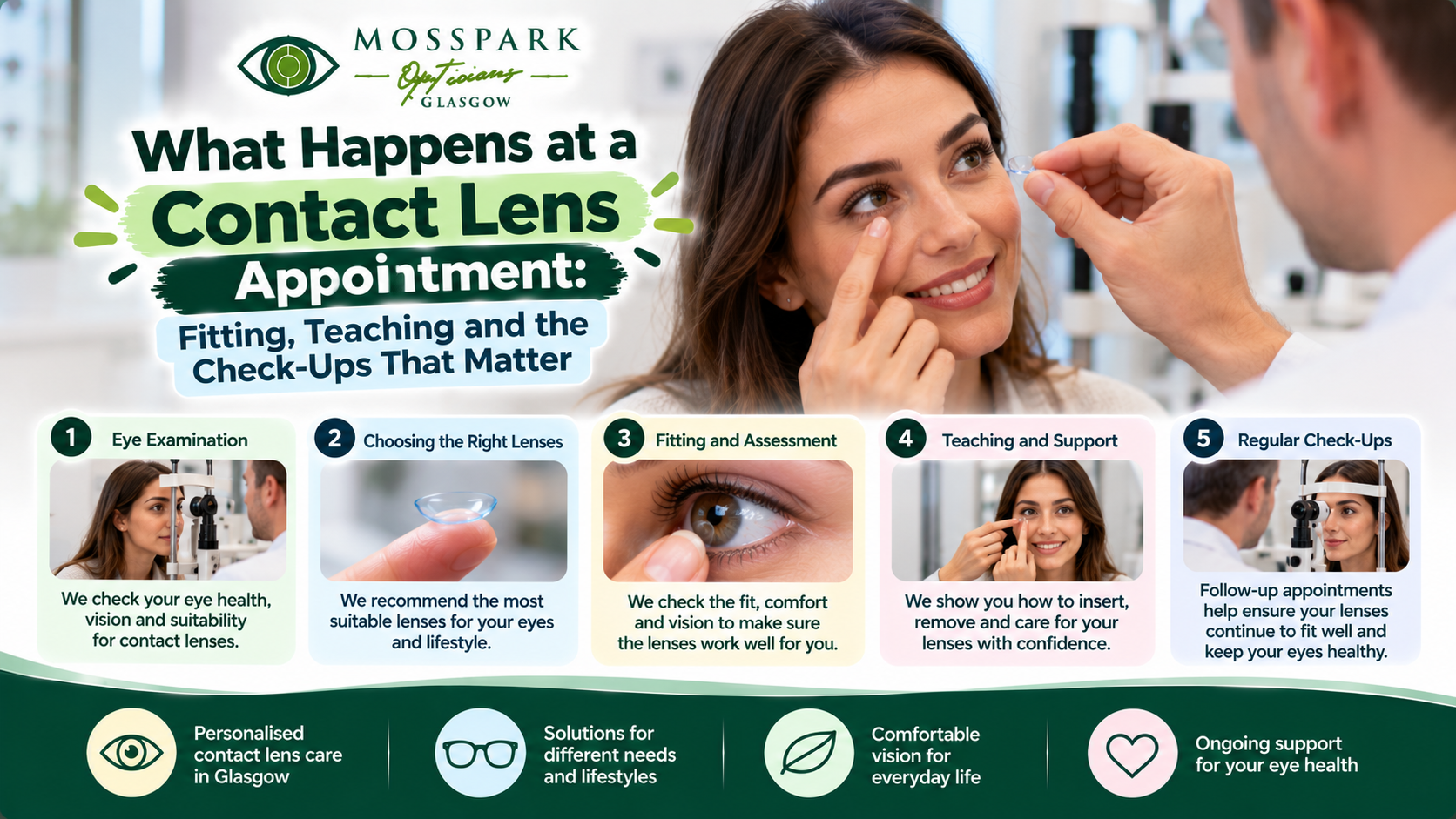


Most people book a contact lens appointment expecting to try a lens, see whether they can see, and go home with a box. A proper appointment does a lot more than that, and knowing what to expect makes the first one much less daunting.
There are two kinds. The fitting, when you start wearing lenses or change to a new type, and the check-up, often called aftercare, that keeps you wearing them safely. Both matter, and the second is the one people skip
Once you are wearing lenses, regular check-ups keep them safe. For most people that means once a year, sometimes more often.
Problems found early at a check-up are usually simple to fix. The same problem found late can mean weeks without lenses.
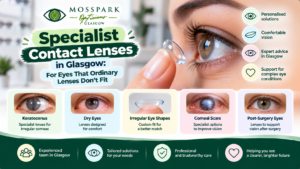
Small, firm lenses that let oxygen through. They give very sharp vision, particularly for irregular corneas and astigmatism, and they last much longer than soft lenses. They take a week or two to get used to.
Larger rigid lenses that vault over the cornea and rest on the white of the eye, with a layer of fluid underneath. Many people find them more comfortable than smaller rigid lenses, and they suit irregular corneas and some very dry eyes.
Soft lenses designed for astigmatism, shaped to stay the right way round on the eye. Standard ranges cover most prescriptions, and made-to-order versions extend that a long way. There is more in astigmatism explained.
Soft or rigid lenses with zones for distance and near, for people over 40 who would rather not reach for reading glasses.
Rigid lenses worn overnight to reshape the cornea temporarily, so you can see clearly through the day with no lenses in. Explained in full in Ortho-K in Glasgow.
People skip check-ups because their eyes feel fine. Most of the changes I am looking for do not hurt until they are advanced. Over-wearing, sleeping in lenses and old cases all leave signs on the eye long before they cause symptoms.
If you buy lenses somewhere else, the supplier is still expected to make arrangements for your aftercare, so ask what those are before you buy. Lenses bought from abroad come with no such arrangement.
If you are not sure whether lenses are for you at all, glasses or contact lenses: how to decide sets out the trade-offs. Most of my lens wearers use both. If you are over 40, multifocal lenses are an option, as explained in contact lenses in Glasgow: daily, monthly or Ortho-K. And if you were told in the past that lenses would not work for you, the options are wider than they used to be, as you will see on our contact lens page.
Book your comprehensive eye examination or eyewear styling consultation with
Mosspark Opticians today.
A first fitting usually takes longer than a routine check-up, because it includes trial lenses and teaching, and it may involve a follow-up visit before it is complete. A check-up for an existing wearer is usually shorter. The practice will tell you how long to allow when you book.
Yes, if you already wear lenses and your eyes are comfortable, wear them so the optometrist can see how they fit and move. Bring your glasses and lens details too. If your eye is red or painful, leave the lenses out and mention it when you book.
Most contact lens wearers need a check-up once a year, and some need them more often. Your contact lens specification has an expiry date, which is normally set at the date of your next check-up.
It is a signed record of the lenses you were fitted with, issued when the fitting is complete. It includes the lens details, the practice and optometrist, and an expiry date. Lenses should not be supplied after it expires.
Specialist fittings usually take more than one appointment. Lenses are often made to order from measurements of the eye, and the design may be adjusted after trial wear before the final lenses are supplied.
Other Articles from Mosspark Opticians: