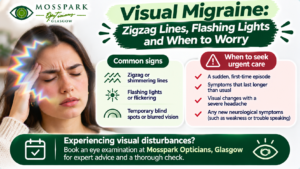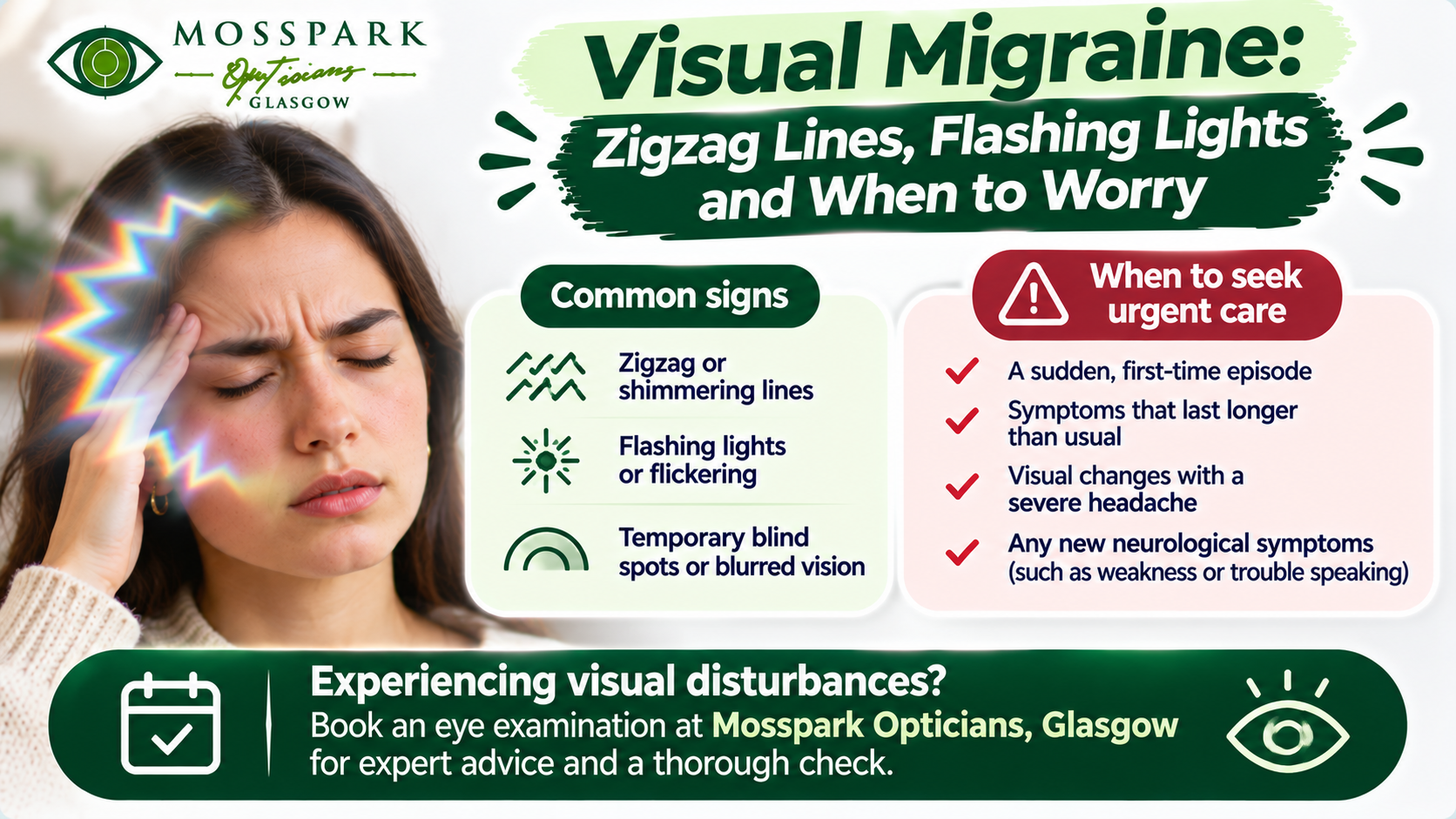

A visual migraine, also called a migraine aura, is a temporary change in your vision: shimmering zigzag lines, flashing lights or a blind spot that slowly spreads and then fades, usually within 5 to 60 minutes. It starts in the brain, not the eyes, and it can happen with or without a headache. If it is the first time, it lasts more than an hour, or it comes with weakness, numbness or difficulty speaking, get help urgently.
Many people who come to Mosspark Opticians after their first visual migraine are worried they are losing their sight or having a stroke. Most of the time, it is a migraine aura and their eyes are healthy. But the first time it happens, it is always worth checking, because a few eye and brain problems can look similar.
A typical visual aura starts as a small, flickering or bright spot near the centre of your vision, often making it hard to read. Over the next few minutes it grows into a shimmering arc with zigzag edges, a bit like the edge of a broken mirror, which slowly drifts towards the side of your vision. Behind it there may be a blurred or missing patch. After 20 to 30 minutes, sometimes up to an hour, it fades and your vision returns to normal.
A headache may follow within the hour, but it does not always. Visual migraines without a headache become more common as people get older.
A migraine aura comes from the part of the brain that processes vision, so it affects the view from both eyes. If you cover one eye, then the other, the zigzag lines are still there.
If the disturbance is only in one eye, the cause is more likely to be in that eye or its blood supply. Brief loss of vision in one eye can be a warning sign of a problem with blood flow, so get urgent advice the same day.
Migraine aura | Flashes from the retina | |
What you see | Shimmering zigzag lines, a spreading blind spot | Brief flicks or arcs of light at the edge of vision |
How long | Builds over minutes, lasts 5 to 60 minutes | A second or two, often repeating |
Eyes affected | Both (still there with one eye covered) | One eye |
Often with | Headache, feeling sick, light sensitivity | New floaters, or a shadow or curtain across vision |
What to do | First time: get checked. Longer than an hour: urgent advice | Same-day eye examination |
New flashes with a shower of floaters or a shadow across your vision can be a sign of a retinal tear, which needs to be seen the same day. Read more in eye floaters and flashes: when to worry.
Not everyone with migraine has clear triggers, but common ones include:
Keeping a diary of when your auras happen can help you and your GP spot a pattern
After a first visual migraine, an eye examination can rule out eye causes. We check the retina for tears and other problems, look at the optic nerve, and test your field of vision if it is needed. If your eyes are healthy and the description fits migraine, we will suggest you see your GP about managing it.
Eye strain itself does not cause a migraine aura, but an out-of-date prescription can add to headaches in people who already get migraines. Our guide to headaches and your eyes explains how to tell eye-related headaches apart. If a visual change comes on suddenly and does not fit the pattern above, our emergency eye care guide explains where to go.
Pull over safely and wait until your vision has completely returned to normal before you set off again. Our guide to eyesight and driving covers the wider rules.
If you have had a visual migraine for the first time, call Mosspark Opticians on 0141 427 4040, or visit us at 115 Airth Drive, Bellahouston, Glasgow G52 1JU.
Book your comprehensive eye examination or eyewear styling consultation with
Mosspark Opticians today.
Yes. Some people get the zigzag lines or blind spot of a migraine aura with no headache at all. It is more common as people get older. The first time it happens, it is worth getting your eyes checked.
The visual symptoms usually build up over a few minutes and last between 5 and 60 minutes before fading. If they last longer than an hour, get urgent advice from your GP or NHS 24 on 111.
A typical migraine aura is not dangerous and does not damage the eyes. But some serious conditions can look similar, so a first episode, one that affects only one eye, or one with weakness, numbness or difficulty speaking needs urgent attention.
For some people, yes. Bright, flickering or glaring light is a common trigger, along with lack of sleep, skipped meals, stress and dehydration. A diary can help you spot your own triggers.
No. If an aura starts while you are driving, pull over safely and wait until your vision has completely returned to normal before you set off again.
Other Articles from Mosspark Opticians: