
Conjunctivitis is inflammation of the thin, clear layer that covers the white of the eye and the inside of the eyelids. It makes eyes red, gritty, watery or sticky. Most cases clear on their own within one to two weeks, and children do not usually need to stay off school or nursery. But some red eyes that look like conjunctivitis are more serious, so it is worth knowing the difference.
At Mosspark Opticians we see conjunctivitis most weeks through the winter, often in children who have brought it home from nursery, and then in the parents who caught it from them. In Scotland, your optometrist is a good first place to go with any eye problem, and an NHS eye examination for a new problem is free.
There are three main types, and they need different things.
|
Type |
Typical signs |
Contagious? |
What usually helps |
|
Viral |
Watery, pink eyes, often one then the other, often with a cold |
Yes |
Time, cool compresses, lubricating drops |
|
Bacterial |
Sticky yellow or green discharge, lashes stuck together in the morning |
Yes |
Cleaning the lids; antibiotic drops in some cases |
|
Allergic |
Very itchy, both eyes, often with sneezing or a runny nose |
No |
Avoiding the trigger; antihistamine drops |
Viral conjunctivitis is the most common type, and antibiotics do not help it. Allergic conjunctivitis is more usual in spring and summer, but in winter it can be triggered by dust mites, pets or the central heating stirring up dust.
A pharmacist can also advise, and under Pharmacy First Scotland can supply antibiotic drops for bacterial conjunctivitis where they are appropriate.
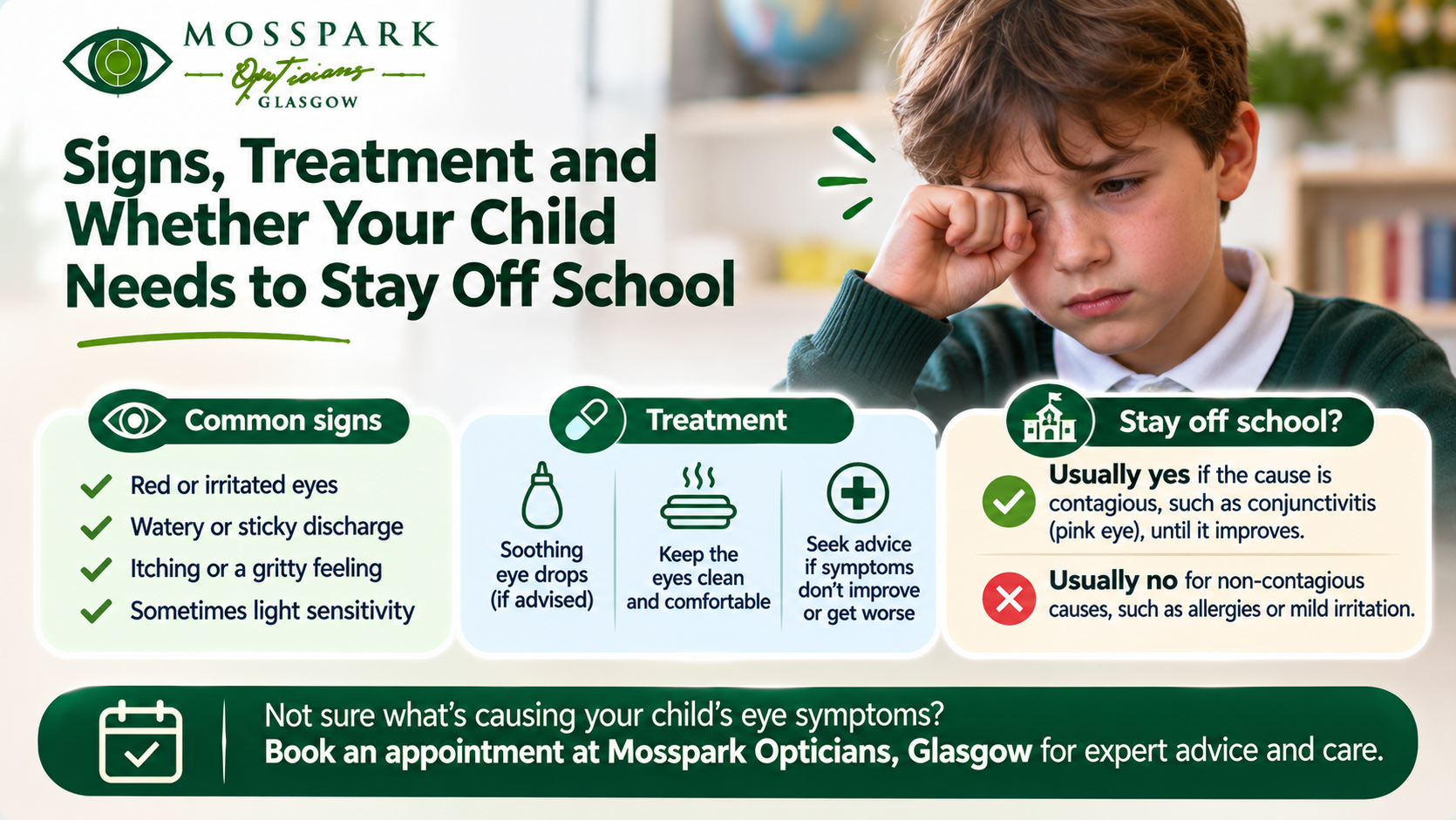
Under UK public health guidance, children do not need to stay off school or nursery with conjunctivitis unless they feel unwell. It spreads easily, so good handwashing and their own towel help. Some nurseries have their own policies, so it is worth checking with yours.
Newborn babies are different. If a baby under four weeks old has red, sticky eyes, get them seen urgently the same day by calling your GP practice or NHS 24 on 111.
If you wear contact lenses and your eye becomes red and painful, take your lenses out and get the eye checked the same day. In a lens wearer, what looks like conjunctivitis can be an infection of the cornea, the clear front window of the eye, which needs prompt treatment. Do not put lenses back in until the eye has settled and you have been told it is safe. Our guide to sleeping in contact lenses explains why overnight wear raises the risk, and our contact lens aftercare covers lens hygiene in more detail.
When you come in with a red eye, we examine the front of the eye under a microscope. That lets us tell which type of conjunctivitis you have, and, just as important, check that the cornea is not involved. As Independent Prescribing optometrists, we can prescribe treatment if it is needed, so you do not need a separate GP appointment. If something more serious is going on, we can arrange an urgent hospital referral.
For other causes of a red eye, such as a burst blood vessel or inflammation inside the eye, see our guide to red eyes and where to get help. For anything sudden or painful, our emergency eye care guide explains what to do. And if your child keeps getting sore or sticky eyes, it is worth booking a children’s eye test to rule out anything else.
If you have a red or sticky eye, call Mosspark Opticians on 0141 427 4040, or visit us at 115 Airth Drive, Bellahouston, Glasgow G52 1JU.
Book your comprehensive eye examination or eyewear styling consultation with
Mosspark Opticians today.
Viral and bacterial conjunctivitis are contagious while the eyes are red and watery or sticky, so wash your hands often and do not share towels or pillows. Allergic conjunctivitis is not contagious.
Bacterial conjunctivitis usually clears within about a week. Viral conjunctivitis can take one to two weeks, sometimes longer. Allergic conjunctivitis lasts as long as you are in contact with whatever you are allergic to.
Usually not. Antibiotics only work on bacterial conjunctivitis, and many bacterial cases clear without them. They do nothing for viral or allergic conjunctivitis. An optometrist or pharmacist can tell you whether drops are likely to help.
Under UK public health guidance, children do not need to stay off school or nursery with conjunctivitis unless they feel unwell. Some nurseries have their own rules, so check with yours.
In Scotland, an optometrist is a good first port of call for any eye problem, and an NHS eye examination for a new problem is free. A pharmacist can also advise on mild cases. Out of hours, call NHS 24 on 111. Babies under four weeks old with red, sticky eyes need to be seen urgently.
Other Articles from Mosspark Opticians: