

“The words move about.” “The page is too bright.” “My eyes hurt when I read.” When a child says things like this, parents understandably look for answers, and coloured overlays are often suggested. Visual stress is a real experience for many children and adults, but it is easily confused with other problems, some of which are simple to fix.
This article explains what visual stress is, how it differs from dyslexia, and what should be checked first.
This article is for older people and for the families and carers who worry about them. It explains how vision affects balance and safety, and the practical steps that help.
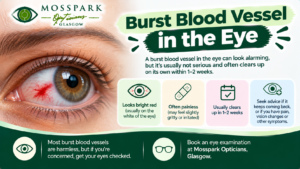
Its medical name is a subconjunctival haemorrhage. This article explains why it happens, how long it takes to clear, and the signs that mean you should have it checked.
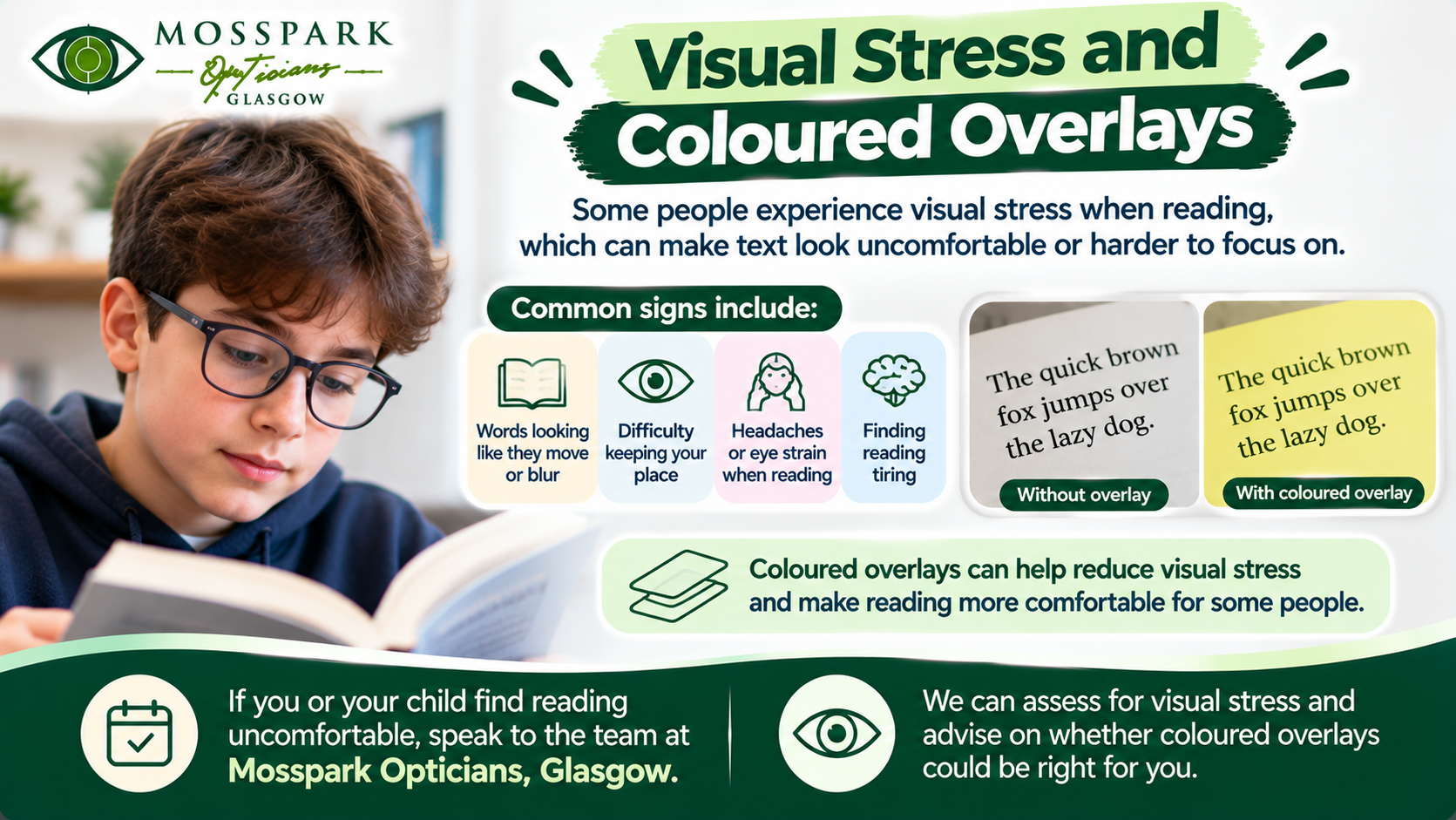
Visual stress, sometimes called Meares-Irlen syndrome, describes discomfort and distortion when reading, especially black text on bright white paper. People describe letters that blur, shimmer, move or run together, and they often get headaches or tired eyes after reading for a short tim
Dyslexia is a difference in how the brain processes language and the sounds of words. It is not caused by eyesight, and no glasses or coloured overlay can treat it. Visual stress is about visual discomfort when reading. Some people have both, some have one, and some have neither and struggle for another reason. A child who is struggling with reading may need support from school as well as an eye examination.
At a child’s eye examination we check distance and near vision, measure the prescription accurately, and look closely at how the eyes focus and work together at reading distance. These are the problems most often missed, because a child can read the letter chart perfectly and still struggle with a page of text after ten minutes. We also check the health of the eyes.
Coloured overlays are tinted sheets placed over the page. Some people find that one particular colour makes reading more comfortable and the text more stable. Precision tinted lenses, prescribed after a more detailed colour assessment, are another option.
The research on overlays and tinted lenses is mixed, and they do not help everyone. They also do not treat dyslexia. Our advice is to rule out other eye problems first, then, if symptoms continue, consider a structured assessment rather than buying overlays at random. Colour assessments are not normally part of an NHS eye examination. If it would help, we can talk you through the options and where to go.
Our guide to what age children should have their eyes tested explains why regular checks matter, and our article on headaches and eyes covers when headaches may be linked to vision
Our appointments are never rushed, so there is time to look carefully at reading vision and talk through what you have noticed at home. Find out more about children’s eye care in Glasgow at our Glasgow Southside practice.
To book your child’s eye examination, call us on 0141 427 4040.
Book your comprehensive eye examination or eyewear styling consultation with
Mosspark Opticians today.
Visual stress describes discomfort and distortion when reading, such as words that seem to move, blur or flicker, often with headaches or tired eyes.
No. Dyslexia is a difference in language processing and is not caused by eyesight. Visual stress is visual discomfort when reading. A person can have one, both or neither.
Some people find a particular colour makes reading more comfortable, but the research is mixed and overlays do not help everyone. They do not treat dyslexia.
Yes. NHS eye examinations are free for everyone in Scotland, including children.
If they cannot get to a practice on their own because of their health, they may qualify for a free NHS home eye test in Scotland.
Other Articles from Mosspark Opticians:
Holiday Closure
We’ll be closed from 26th October to 9th November, reopening on 10th November.
Thank you for your understanding!
Team Mosspark Opticians