
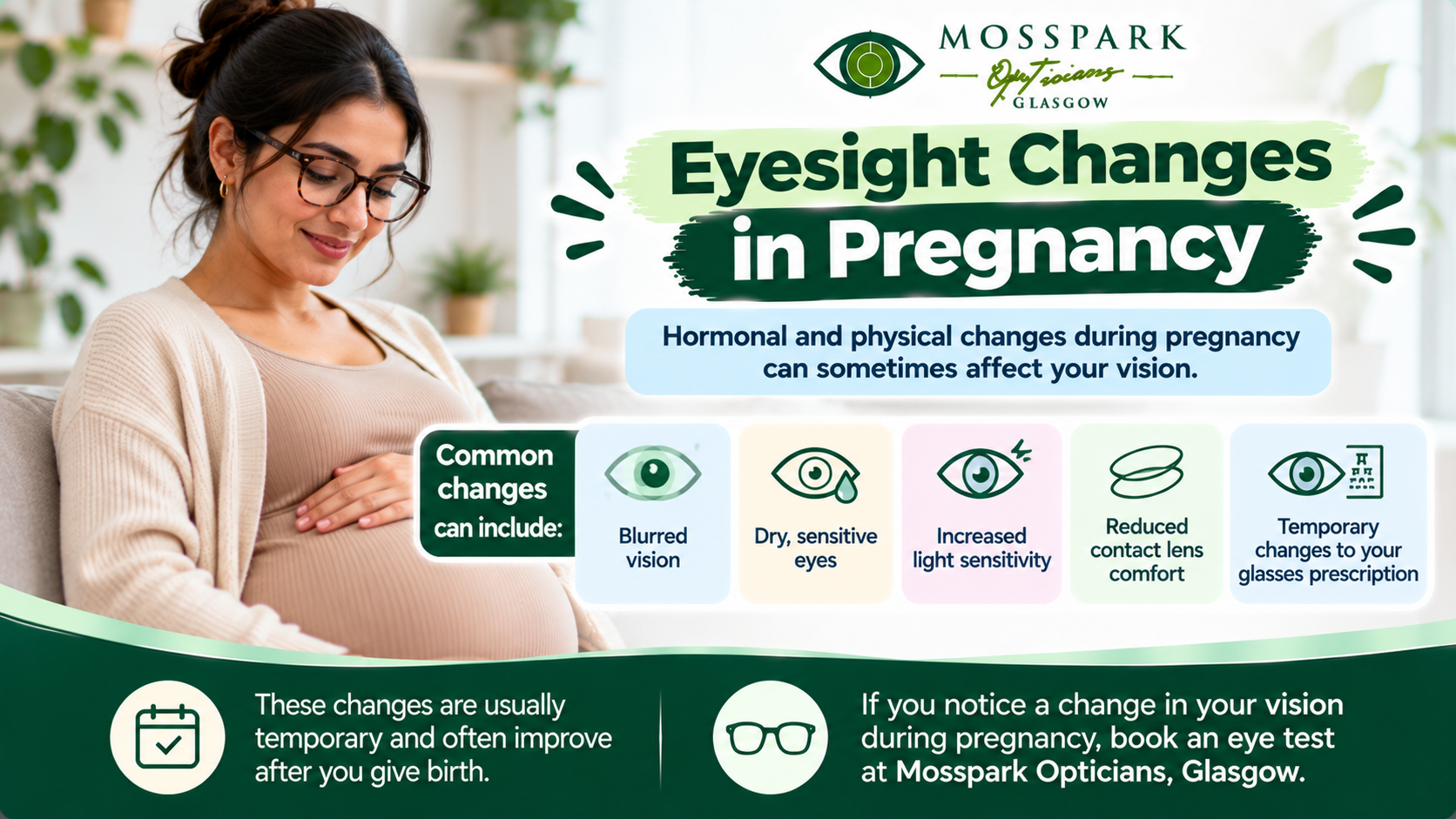

Pregnancy changes almost everything, and your eyes are no exception. Many women notice eyesight changes in pregnancy, from slightly blurry vision to dry eyes or contact lenses that suddenly feel uncomfortable.
Most of these changes are harmless and settle after the baby is born. A few, however, can be a sign of something that needs urgent attention. This article explains how to tell the difference.
If you have had a stroke, or you care for someone who has, this article explains what to look out for and the help that is available.
Pregnancy hormones cause the body to retain more fluid, and that includes the eyes. The cornea, the clear front surface of the eye, can become slightly thicker and change shape. Tear production and tear quality can also change. Together, these can affect how clearly you see and how comfortable your eyes feel.
Slightly blurred vision
Small changes in the shape of the cornea can alter your prescription slightly, so your glasses may not seem quite as sharp as before. This usually settles within a few months of giving birth or finishing breastfeeding.
Dry, gritty eyes
Hormonal changes can reduce the quality of your tears, leaving the eyes dry, gritty or tired, especially by the end of the day. Preservative-free lubricating drops often help, but check with your optometrist or pharmacist which drops are suitable in pregnancy.
Contact lens discomfort
Changes to the cornea and tears can make lenses feel less comfortable or harder to wear for a full day. Wearing them for shorter periods, or switching to glasses for a while, usually helps.
Puffy eyelids
Fluid retention can make the eyelids look puffy, particularly in the morning. On its own, mild puffiness is common. Sudden swelling of the face is different, and is covered below.
If the change in your vision is small, it is often better to wait until a few months after your baby is born, when your eyes have settled, before updating your prescription. Otherwise you may need new glasses again shortly afterwards.
If you are struggling to see clearly for driving or work, however, get your eyes checked. There is no need to put up with poor vision, and an eye examination will also confirm that nothing else is going on.
If you have diabetes, or develop diabetes during pregnancy, your eyes may need closer monitoring, because pregnancy can affect the blood vessels at the back of the eye. Your diabetes care team will advise on screening during pregnancy. Read more about diabetic eye screening and your eye test.
If your eyes feel persistently dry or gritty, our guide to dry eye explains what can help.
Yes. A routine eye examination is safe during pregnancy. Please tell us that you are pregnant, as it helps us interpret any changes and decide which eye drops, if any, are appropriate. Laser eye surgery is not recommended during pregnancy, as your prescription may not be stable.
NHS eye examinations are free for everyone in Scotland. Find out more about our eye examinations at our Glasgow Southside practice.
To book an eye test, call us on 0141 427 4040.
Book your comprehensive eye examination or eyewear styling consultation with
Mosspark Opticians today.
Yes. Fluid retention and hormonal changes can cause slightly blurred vision, dry eyes and contact lens discomfort. These usually settle after pregnancy.
Blurred vision, flashing lights or spots, especially with a severe headache or sudden swelling, can be signs of pre-eclampsia. Contact your midwife or maternity unit immediately.
For small changes, it is often best to wait until a few months after your baby is born. If you cannot see clearly for driving or work, get your eyes checked.
Usually yes, although they may feel less comfortable. Reduce your wearing time or switch to glasses if needed.
Yes. A routine eye test is safe. Tell your optometrist that you are pregnant so they can take it into account.
Other Articles from Mosspark Opticians:

Holiday Closure
We’ll be closed from 26th October to 9th November, reopening on 10th November.
Thank you for your understanding!
Team Mosspark Opticians