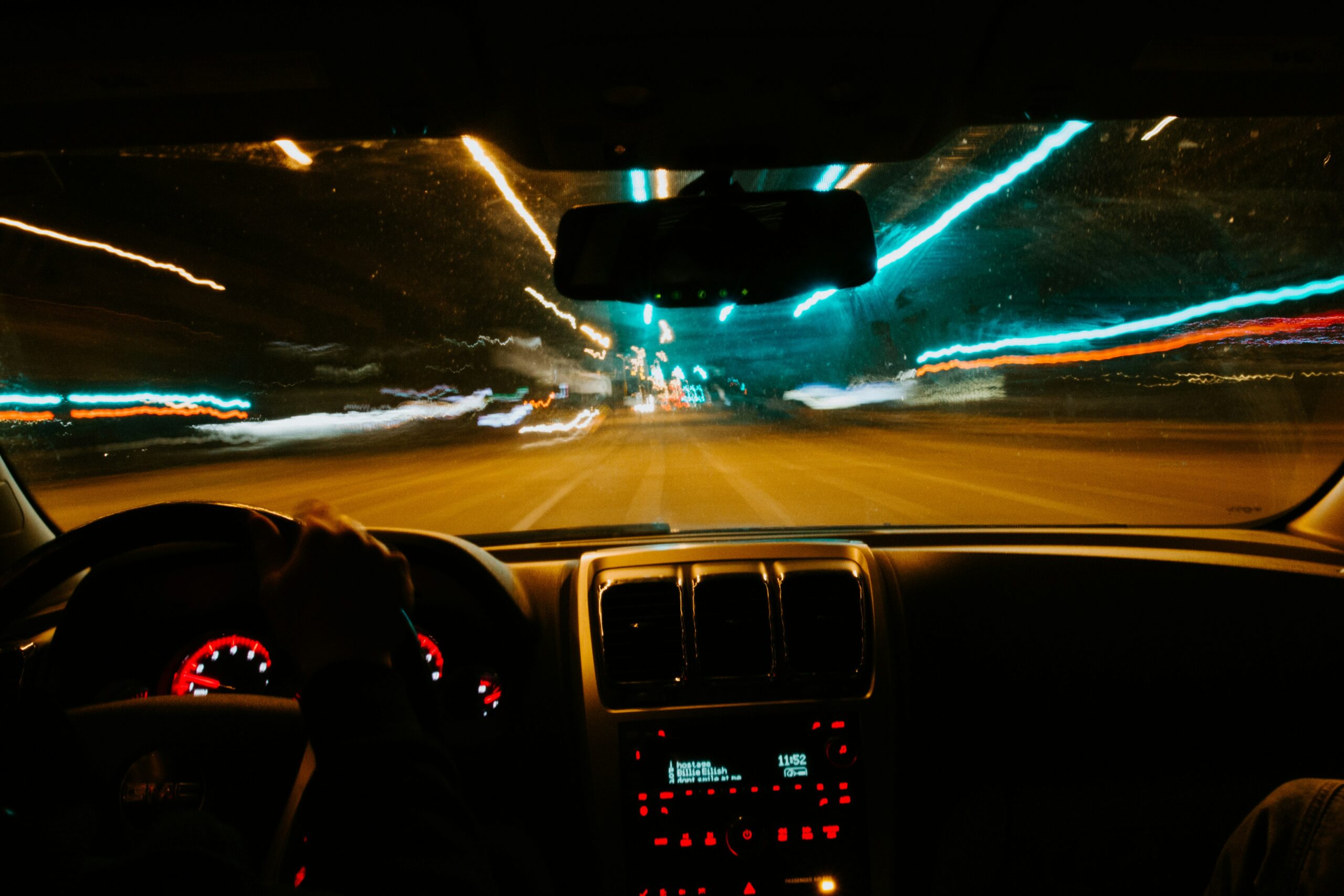

If night driving has started to feel harder than it used to – headlights seem brighter, road markings are harder to pick out, and oncoming traffic leaves a starburst smear across your vision – you’re not imagining it. Something has changed, and it’s almost always fixable once you know what’s causing it.
In low light, your pupils dilate to let more light in. That’s useful, but it also means any optical imperfection in your eye – a slightly outdated prescription, mild astigmatism, early cataract changes – has a bigger effect on your vision than it does in daylight. During the day, a smaller pupil masks minor issues. At night, those issues are unmasked, and you notice them.
An Outdated or Slightly Wrong Prescription
This is the most common and most easily fixed cause. Even a small prescription error that you don’t notice during the day can produce halos, streaking, or reduced contrast at night. A thorough eye examination will check whether your current prescription is still accurate for both day and night conditions.
Uncorrected Astigmatism
Astigmatism causes light to focus unevenly, which in daylight might produce only mild blur but at night creates noticeable starbursts and streaks around point light sources like headlights and street lamps. If your prescription doesn’t include a cylinder correction, or the cylinder value has changed, this is often the culprit.
Early Cataracts
Cataracts scatter incoming light as they develop, which is exactly why glare and halos around lights are one of the earliest symptoms – often noticed while driving at night long before daytime vision is affected. If your night vision has deteriorated gradually over months or years, a cataract check is worth having.
Dirty or Damaged Lenses
Scratches, smudges, and degraded anti-reflective coatings on your existing glasses scatter light and increase glare dramatically. If your lenses are more than two years old, the coating may have started to degrade even if the prescription is still fine. Sometimes the fix is new lenses in your existing frames rather than a whole new pair.
The one thing that does NOT help Tinted “night driving glasses” sold online with yellow or amber lenses. They reduce the already-limited light available, lower contrast, and multiple studies have shown they make night vision worse, not better. If you’ve bought a pair and they “feel” better, it’s placebo – the measured visual performance consistently declines. |
High-quality anti-reflective coatings – a properly coated lens from our state-of-the-art lens range reduces internal reflections and cuts the starburst effect dramatically compared to an uncoated or degraded lens
If night driving has become noticeably harder, or you’re actively avoiding it, don’t just accept it – get it assessed. At our Glasgow optician practice, we can check your prescription, screen for early cataracts, and advise on the lens coatings that make the biggest difference after dark. Get in touch or call 0141 427 4040.
Book your comprehensive eye examination or eyewear styling consultation with
Mosspark Opticians today.
Modern LED headlights are objectively brighter than older halogen bulbs, but if the effect is worsening, it usually points to changes in your eyes - an outdated prescription, early cataracts, or degraded lens coatings.
No - research consistently shows they reduce contrast and make night vision worse, not better. A proper anti-reflective coating on your prescription lenses is the evidence-based solution.
Yes - cataracts scatter incoming light, and glare and halos around headlights at night are often one of the earliest noticeable symptoms, sometimes years before daytime vision is affected.
Every two years as standard, or annually if you're over 60 or have noticed any change in your night vision. Any sudden change warrants an earlier check.
Often yes - if your frames are in good condition, reglazing with a premium anti-reflective coating can significantly reduce night-time glare without needing new frames.
Other Articles from Mosspark Opticians: