
In a care home, poor vision rarely announces itself. A resident stops reading the paper, leaves food on one side of the plate, hesitates on a step, or seems less interested in the people around them. It gets put down to age or to dementia, and nobody thinks to ask when their eyes were last examined.
I visit care homes and sheltered housing on Glasgow’s Southside. This post is for the managers and staff who arrange those visits, and for families who want to know what their relative should be getting.
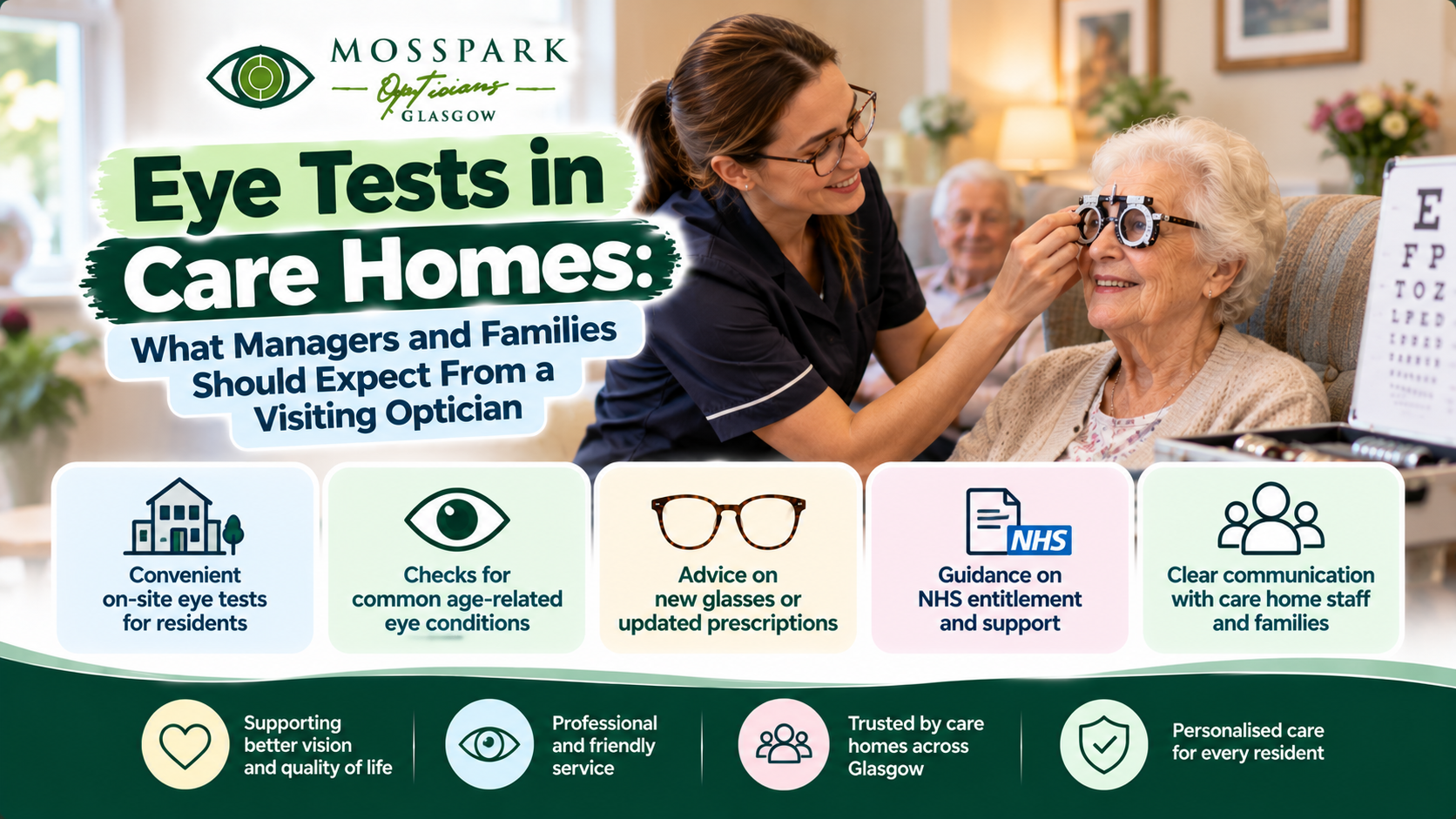
NHS eye examinations are free for everyone in Scotland. An examination where you live, including in a care home, is available to anyone who cannot attend a practice unaccompanied because of a physical or mental illness or a disability. Most care home residents meet that, and a member of staff, a relative or a carer can arrange it for them.
Residents aged 60 and over can be examined every year, and sooner if something changes. The wider rules for home visits are in home eye tests in Glasgow: who qualifies, what happens, and how to arrange one.
A care home visit should be a real eye examination with portable equipment, not a quick look at the letters on a card.
If new glasses are needed, they should be fitted and adjusted on the resident, not left in a box at reception.
Several of these can look like a change in memory or mood, which I have written about in vision, memory and getting older.
A few practical habits make a big difference.
If your relative has moved into a care home, ask when their eyes were last examined and who arranges the next one. If nobody is sure, contact us and we can arrange a visit. Our home visit eye tests page explains how it works.
The conditions I am most often looking for at this age are explained in cataracts explained, the early signs of macular degeneration and glaucoma and what an OCT scan shows.
Book your comprehensive eye examination or eyewear styling consultation with
Mosspark Opticians today.
Yes. NHS eye examinations are free for everyone in Scotland, and residents who cannot attend a practice unaccompanied because of a physical or mental illness or a disability are entitled to an NHS examination where they live, including in a care home.
In Scotland, people aged 60 and over can have a free NHS eye examination once a year. You should book sooner if you notice any change, such as blurred or distorted vision, new floaters or flashes, or a painful red eye.
Yes. An optometrist can use picture charts, matching tests and measurements that need no spoken answers, and can examine the health of the eye without the person having to cooperate fully. Staff or family should share any communication needs before the visit.
A list of residents due an examination, each resident’s current glasses labelled with their name, details of medication and eye conditions, notes on any communication needs, and a quiet, well-lit space to work in.
Ask the care home who arranges eye examinations and when your relative was last seen. A relative, carer or member of staff can also contact a practice that offers home visits directly to arrange one.
Other Articles from Mosspark Opticians: