

Most glasses wearers have a drawer somewhere with three or four old pairs in it. Some still work, some are broken, and one is a frame you loved and could never quite bring yourself to throw out.
There is a use for nearly all of them. The trick is knowing which pair is which.
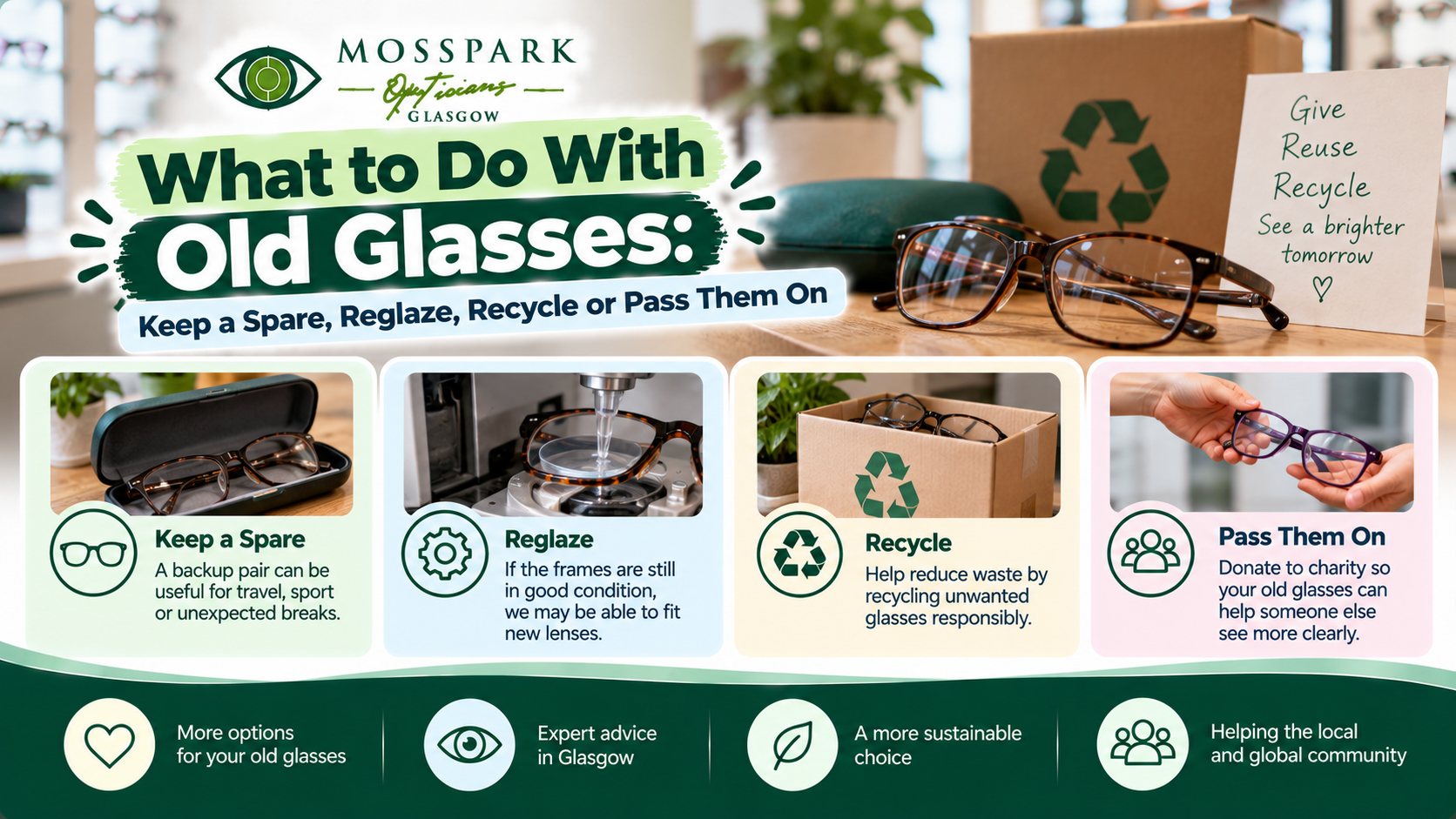
Everyone who depends on their glasses should have a spare pair. Glasses get sat on, dropped and left in taxis, and the day it happens is never a convenient one.
Your previous pair may do the job. If you are not sure whether it is close enough to your current prescription, bring it in and we can check it in a few minutes.
Reglazing means putting new lenses into a frame you already own. It is a good option when the frame is in good condition and you are happy with how it looks and fits. I have answered the common questions in can you put new lenses in old frames.
Before you decide, check the frame honestly.
An old frame can also become a pair of prescription sunglasses with tinted or polarised lenses, which is a good use for a pair you no longer want to wear every day. The options are in prescription sunglasses in Glasgow.
Glasses are made of mixed materials, plastics, metals and coated lenses, so they rarely belong in the household recycling bin. Some charities and schemes collect old glasses and frames for reuse or recycling. Ask us and we will tell you what is currently available locally.
Lenses are made for one person’s eyes, so glasses that are collected are usually sorted, recycled or reused for the frame rather than given straight to someone else. Clean them and pop them in a case before you hand them over.
Clearing out a parent’s glasses is often the moment people realise how many pairs they have been switching between, sometimes because none of them is quite right any more. If that sounds familiar, it is worth booking them an eye examination. From 60, NHS examinations in Scotland are available every year, as explained in eye tests after 60 in Scotland. And if they have not seemed themselves lately, read vision, memory and getting older.
And if the real problem is that your current glasses are scratched, start with how to remove scratches from glasses before you decide anything.
Book your comprehensive eye examination or eyewear styling consultation with
Mosspark Opticians today.
Keep your most recent previous pair as a spare if the prescription is close to your current one. A spare is especially useful if you have a strong prescription, wear contact lenses or drive. Older pairs with an out-of-date prescription should not be worn for driving or regular use.
Usually, yes, if the frame is in good condition. Reglazing works well for sound frames, but frames with loose hinges, cracks, brittle plastic or corrosion may not survive new lenses being fitted, and some frames are too shallow for varifocals.
Some charities and recycling schemes accept old glasses and frames. Because lenses are made for one person’s eyes, donated glasses are usually sorted and recycled or reused for their frames. Ask your optician about schemes available locally.
Wearing an old prescription will not damage your eyes, but it may not correct your vision properly, which can cause blur, eye strain and headaches. It may also not meet the legal standard for driving. If your glasses no longer feel right, book an eye examination.
Often, yes. A frame in good condition can be fitted with tinted or polarised prescription lenses, which turns a pair you no longer wear every day into prescription sunglasses.
Other Articles from Mosspark Opticians:

Holiday Closure
We’ll be closed from 26th October to 9th November, reopening on 10th November.
Thank you for your understanding!
Team Mosspark Opticians