

People are sometimes surprised that I do not mind patients buying their contact lenses online. Plenty do, and for many of them it works well.
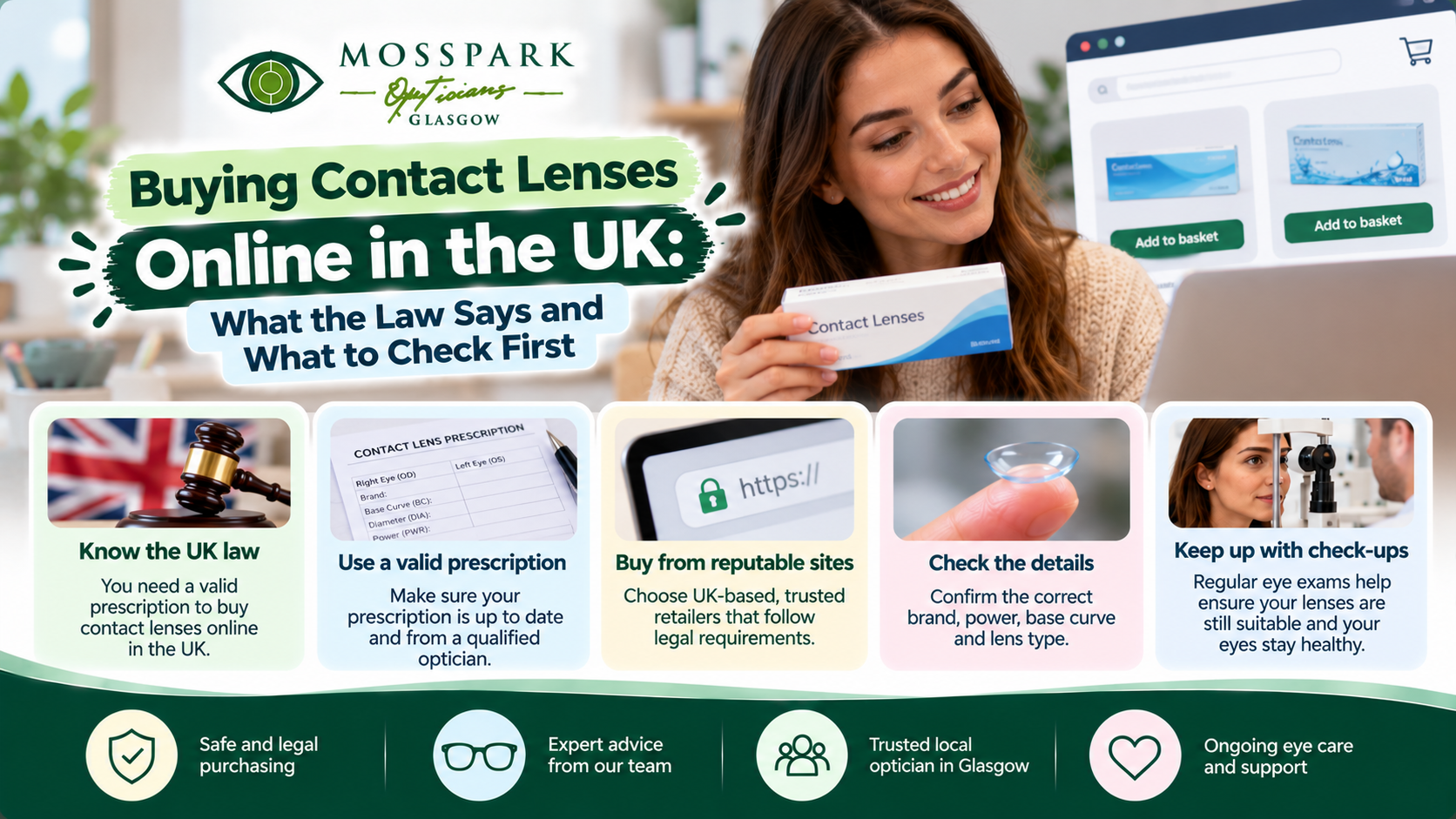
What I do mind is people buying lenses without the information that keeps them safe: a current specification, the right lens, and someone checking their eyes. The rules on selling contact lenses in the UK exist for that reason, and knowing them makes it much easier to spot a seller who is cutting corners.
In the UK, contact lenses are covered by the Opticians Act 1989. Lenses can be sold by, or under the supervision of, a registered optometrist, dispensing optician or doctor. A seller working without that supervision, which includes most websites, can only sell you lenses if they have your contact lens specification, in one of these ways:
Cosmetic lenses with no prescription, including fancy-dress lenses, follow a stricter rule: they can only be sold by or under the supervision of a registered professional, wherever you buy them.
A contact lens specification is not the same as your glasses prescription. Glasses sit about a centimetre from your eye, lenses sit on it, so the powers are often different, and a contact lens specification also records the exact lens: the brand, material, curve and diameter that fitted your eye.
You are given one when your fitting is complete. It has an expiry date, normally set for your next check-up, and lenses should not be supplied after it has expired. What the fitting involves is explained in what happens at a contact lens appointment.
Two lenses with the same power can fit very differently. Brands use different materials, different shapes and different edge designs, and a lens that sits well on your eye is not guaranteed to have a twin from another maker. Swapping to a cheaper “equivalent” without advice is one of the most common reasons I see people whose lenses have started to feel uncomfortable or look blurred. If you want to change brands, ask us first, and we can check how the new lens behaves on your eye.
The lenses are only half of it. The other half is the check-up, where I look at the health of the front of your eye for changes you will not feel until they are a problem. Professional guidance says that a supplier selling you lenses on their own should make arrangements for your aftercare, so ask what those arrangements are before you buy.
Sellers based outside the UK are not bound by the same rules, and if something goes wrong you may need to pay separately for professional advice. Whoever sells you the lenses, keep your check-ups. Most wearers need one once a year.
Solutions matter too. Use the one you were advised to use, and never top up old solution in the case. The everyday choices are explained in daily, monthly or annual: how to choose the right contact lenses.
Wherever the lenses came from, take them out and ring an optometrist the same day if an eye becomes red, painful, sensitive to light or blurred. See our guide to emergency eye care in Glasgow. For blur that comes and goes, the usual causes are in how to stop blurry vision while wearing contact lenses. If you have never been fitted and want to start, our contact lens page explains how it works.
Book your comprehensive eye examination or eyewear styling consultation with
Mosspark Opticians today.
Yes. You can buy contact lenses online in the UK, but the seller must work within the Opticians Act 1989. A seller who is not supervised by a registered optometrist, dispensing optician or doctor needs your contact lens specification, either the original, an acceptable copy, or details they check with the practice that fitted you.
You need a valid contact lens specification, which you receive when a contact lens fitting is complete. It records the exact lens that fits your eye and has an expiry date. A legitimate UK seller will ask for it or check the details with your practice.
No. A glasses prescription does not contain the information needed for contact lenses, such as the lens brand, material, curve and diameter, and the powers are often different because contact lenses sit directly on the eye. You need a contact lens fitting and specification.
Lenses should not be supplied to you after your specification expires. The expiry date is normally set for your next check-up, so book an aftercare appointment, and a new specification will be issued if your eyes and lenses are healthy.
Sellers based outside the UK are not bound by UK rules on checking specifications or arranging aftercare. The lenses may be genuine, but you lose those safeguards, and you may need to pay separately for professional advice if something goes wrong.
Other Articles from Mosspark Opticians:


Holiday Closure
We’ll be closed from 26th October to 9th November, reopening on 10th November.
Thank you for your understanding!
Team Mosspark Opticians