
If your child’s prescription has been creeping up every year – stronger glasses, thicker lenses, another trip to the optician – you’ve probably been told the same thing each time: “It’s just short-sightedness, they’ll grow out of it.” I want to be upfront with you: that’s not quite right, and it matters more than most parents realise.
Myopia – short-sightedness – is increasing in children across the UK, and the evidence increasingly points to a combination of more screen time, less time outdoors, and genetics. But here’s the part most parents haven’t heard: we don’t have to just watch the numbers go up. There are now proven clinical strategies to slow myopia progression in children while they’re still growing, and they work. The problem is, most people don’t know they exist – and most high-street opticians in Glasgow don’t offer them.
For most parents, stronger glasses are an annoyance and an expense – but not something that feels medically serious. And at low levels, that’s broadly true. But higher myopia – the kind that keeps climbing through childhood and adolescence – carries genuinely elevated risks later in life.
None of this is meant to alarm you – but it’s the reason that slowing progression now, rather than just correcting it, is a genuinely important conversation to have with your optician.
|
The key point for parents Myopia management isn’t about avoiding glasses altogether – it’s about reducing how strong the prescription becomes over time, which directly reduces the risk of serious eye conditions in adulthood. The earlier you start, the more difference it makes. |
There isn’t a single solution – it’s a clinical conversation about which approach suits your child’s age, prescription, lifestyle, and how quickly things are changing. Our myopia management service covers the full range of evidence-based options:
Specialist Spectacle Lenses
Lenses like Hoya MiYOSMART use a specific pattern of defocus zones built into the lens to slow eye growth, while still giving the child perfectly clear vision for daily wear. They look and feel like normal glasses – no adjustment needed – and they’re usually the first choice for younger children or anyone who isn’t ready for contact lenses.
MiSight Daily Contact Lenses
MiSight 1 Day is the first soft contact lens clinically proven to slow the progression of myopia in children. They’re daily disposables, so there’s no cleaning routine – just a fresh pair each day. If your child is old enough and motivated to try contact lenses, this is often the option that makes the biggest measurable difference.
Ortho-K (Overnight Lenses)
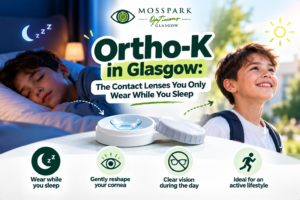
Custom rigid lenses worn only while sleeping, which gently reshape the cornea overnight so the child wakes up with clear vision – no glasses or contacts needed during the day. Particularly useful for sporty children who find glasses impractical, and the reshaping effect also works to slow myopia progression.
Low-Dose Atropine Drops
Pharmacological intervention using very low-concentration atropine eye drops, proven to slow myopia progression with minimal side effects. This is typically used alongside one of the above options for faster progressors, or as a standalone where other approaches aren’t suitable.
Not every optician offers myopia management – and not every practice that mentions it has the clinical experience, equipment, or range of options to do it properly. Here’s what’s worth asking at your next appointment:
If your current optician doesn’t offer these services, that doesn’t make them a bad practice – but it does mean your child isn’t getting the full picture. It’s one of the practical differences between a general high-street test and the kind of specialist children’s eyecare built around clinical depth rather than volume.
The short answer: as early as you can once myopia has been identified. The evidence consistently shows that earlier intervention produces better outcomes, because the fastest progression typically happens between ages 6 and 14. If your child was prescribed their first pair of glasses in the last year or two and the numbers are already moving, now is the time to have this conversation – not at the next routine check. Our guide on when children should get their eyes tested covers the broader picture, including signs to watch for before a formal diagnosis.
Clinical intervention is only part of the picture. The evidence on outdoor time is increasingly strong: children who spend more time outside – at least two hours a day – show meaningfully slower myopia progression than those who don’t, independent of how much screen time they have. It’s thought to be related to the intensity and spectrum of natural daylight, not just “not looking at screens.” So yes, getting them outside genuinely helps – and no, it doesn’t mean banning the iPad entirely.
If your child’s prescription has been getting stronger and nobody’s mentioned myopia management, it’s worth having that conversation now rather than waiting for the next routine test. Get in touch or call us on 0141 427 4040 – we’ll take the time to explain the options properly and help you decide what’s right for your child.
Book your comprehensive eye examination or eyewear styling consultation with
Mosspark Opticians today.
Standard glasses correct your child's vision but don't slow the progression of myopia. Myopia management uses specific lenses, contact lenses, or eye drops clinically proven to slow how quickly short-sightedness worsens during childhood - reducing the risk of serious eye conditions in later life.
It can begin as soon as myopia is identified, typically from around age 6 onwards. The earlier intervention starts, the more effective it tends to be, since the fastest progression usually occurs between ages 6 and 14.
Myopia management uses specific lens designs and clinical strategies to slow the progression of short-sightedness in children while they're still growing. Higher myopia in adulthood carries increased risks of serious eye conditions, so slowing it early makes a meaningful difference.
Independent opticians typically offer longer appointments, greater continuity of care with the same optometrist, no corporate sales targets, and specialist services like dry eye clinics and myopia management that high-volume chain models rarely have time to deliver.
No - myopia management requires specialist equipment, clinical training, and a range of treatment options that many high-street practices don't carry. It's worth checking specifically whether your optician offers dedicated myopia management services.
Yes - all the approaches used (specialist spectacle lenses, MiSight contact lenses, Ortho-K, and low-dose atropine) are supported by clinical evidence and are widely used in paediatric eye care. We'll explain the options and any considerations specific to your child.
Yes - research consistently shows that children who spend at least two hours a day outdoors show slower myopia progression. It's thought to be related to the intensity and spectrum of natural daylight rather than simply reduced screen time.
Usually yes - myopia management slows progression but doesn't eliminate the need for correction. The goal is to keep the prescription as low as possible, which reduces long-term health risks rather than removing the need for glasses entirely.
Other Articles from Mosspark Opticians: