I had a patient a few weeks ago who told me she’d been swimming at Tollcross three mornings a week for eleven years and had never once been able to read the clock at the end of the lane. She counted lengths in her head and hoped for the best. When I asked why she’d never mentioned it, she said she didn’t know it was something an optician could fix.
That conversation happens more often than you’d think. So let’s talk about prescription swimming goggles – what they are, who they suit, and why swimming in your contact lenses is a habit worth breaking.
What prescription swimming goggles actually are
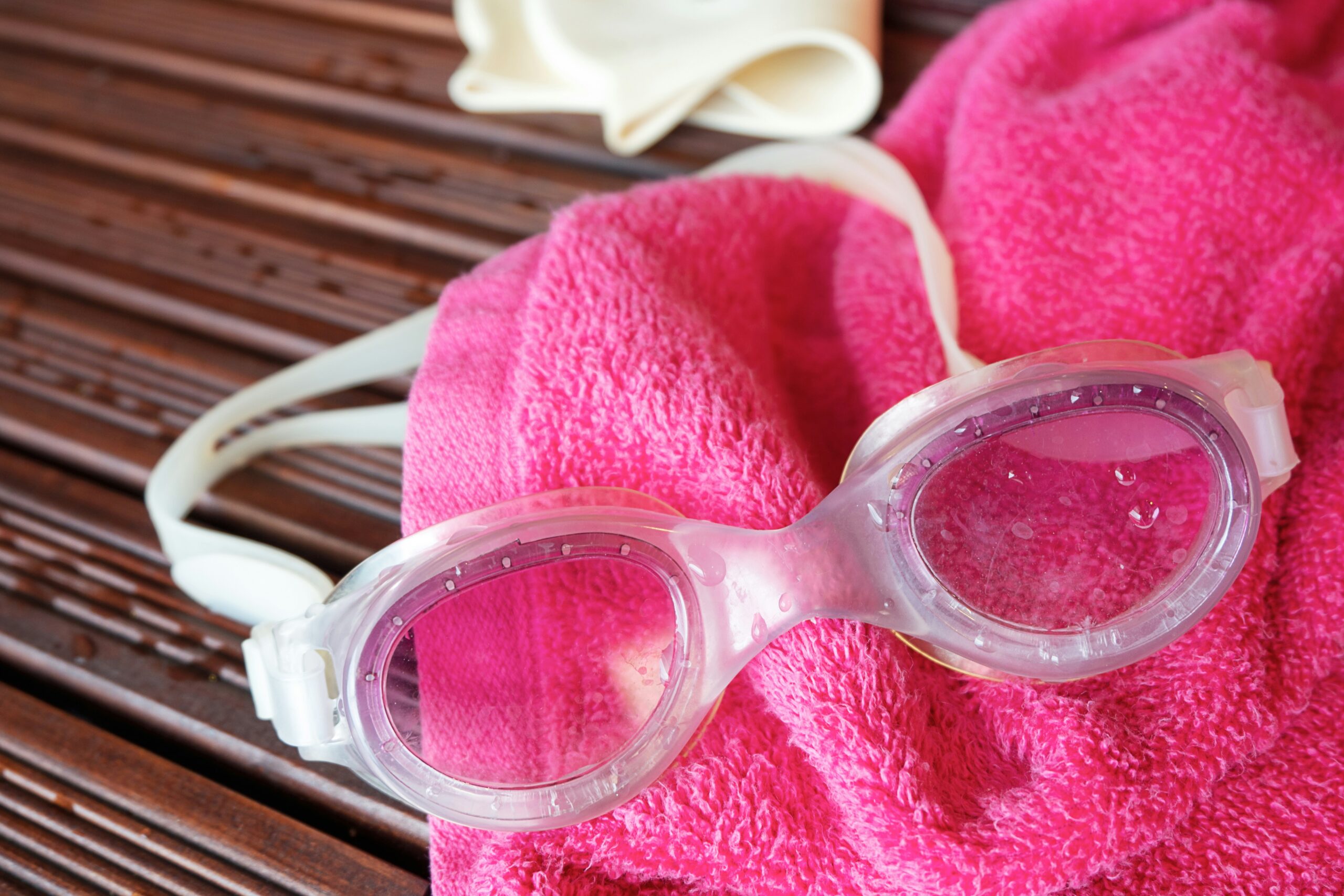
They’re exactly what they sound like: swimming goggles with corrective lenses built into them. There are two broad routes.
Off-the-shelf prescription goggles come with lenses in fixed steps – usually half-dioptre increments. You choose the power closest to your prescription for each eye. They’re affordable, widely available, and for a lot of swimmers they’re completely adequate. The catch is that they correct short or long sight only. If you have astigmatism, these won’t address it, and depending on how much astigmatism you have, the result can still be softer than you’d like.
Custom-made prescription goggles are glazed to your actual prescription, astigmatism included. They cost more and take longer to make, but if you’re a serious swimmer or your prescription is complicated, they’re the ones that genuinely give you your vision back in the water.
Which route is right depends on your prescription and how much time you spend in the pool. That’s a five-minute conversation, and it’s worth having before you buy anything online.
Please stop swimming in your contact lenses
I say this gently, because I know a huge number of people do it and most get away with it. But it’s the one piece of advice in this article I’d ask you to take seriously.
Water – pool water, sea water, loch water, tap water – carries microorganisms. A contact lens sits directly against your cornea and traps them there. The one that worries optometrists most is Acanthamoeba, a microbe found in water that can cause a corneal infection which is painful, difficult to treat, and can permanently damage sight. It’s rare. It’s also very much not worth the risk when the alternative is a pair of goggles.
If you’re going to swim in lenses regardless, wear tight-fitting goggles over them, use daily disposables, and bin them the moment you get out – never re-wear them. But prescription goggles remove the problem entirely, and that’s the better answer.
Getting the fit right
A prescription goggle that leaks is worse than no goggle at all, because now you’re dealing with chlorine in your eyes as well as blurred vision. A few things matter:
The seal should sit on the bone around your eye socket, not on soft tissue.
If you have to overtighten the strap to stop leaks, the frame is the wrong shape for your face.
Anti-fog coatings work, but they wear off. Never wipe the inside of the lens with your finger or a towel – that’s what destroys the coating.
Rinse in clean fresh water after every swim and let them dry properly before they go back in the bag.
For children, get the fit checked in person. Kids’ faces change quickly and a goggle that fitted last summer often won’t this year.
What about open water?
Glasgow has a growing open-water swimming scene, and if you’re heading out to a loch you have the same visibility issue plus glare off the surface and a genuine need to sight properly. Tinted or mirrored prescription goggles help considerably here, and being able to see a marker buoy or a safety boat clearly is a safety matter, not a comfort one.
Come and talk to us
We’re on Airth Drive in Bellahouston, a few minutes from Bellahouston Leisure Centre and easy to reach from most of the Southside. If you swim and you wear glasses, bring your current prescription in and we’ll talk through what’s realistic for your eyes – including being honest with you if an off-the-shelf pair would do the job perfectly well.
This is part of what we do as a sports optician in Glasgow, alongside cycling, running, football, rugby and racquet sports. And because eye examinations are free for everyone in Scotland through the NHS, if you’re due a test we can sort your prescription and your goggles in the same visit.
Give us a ring on 0141 427 4040 or book online. Eleven years of not being able to see the clock is eleven years too many.
Book your comprehensive eye examination or eyewear styling consultation with Mosspark Opticians today.